The following is an excerpt from an ongoing conversation with Yann Novak, our current featured artist on Headphone Community. Since the beginning of this month, we have been talking about Yann’s music career, his approach to composition with sound and light, the perception of reality through mental and physical means, the use of voice, cryptography, and field recordings on his albums, and, of course, his influential Dragon’s Eye Recordings label [we even have his father, Paul Novak, who founded DER in 1989 join the conversation in the comments!]. Besides all the words, which I’m sharing a bit on here with you today, we also have the music, generously gifted by Yann as Bandcamp codes, not only for his own albums, but also for the releases in DER’s catalog, by artists such as Arvin Dola, NAKAMURA Hiroyuki, Cameron MacNair (and more, coming soon). Join us for an intimate experience getting to know this fantastic artist in depth. Below is a hand-picked selection of questions and answers across the entire month. Enjoy!
You’ve described yourself as a “queer autodidact” – a phrase that does a lot of work in two words. When did that particular combination of identities crystallize into something you could name, and how has its meaning shifted over twenty years of practice?
Both have always been present, but I did not advertise them for a good part of my career. Early in my career, I was told that being queer did not align with the work I was making and that it would just pigeonhole me. The implication was that queer art or music looked/sounded a certain way, and my work did not fit. At some point, I realized that the definition of queer art is not going to expand unless artists like me push those boundaries. So I started including it in my bio as a way of declaring that my work did belong there, regardless of whether it fit those preconceptions.
The visual art world is very concerned with pedigree, so the fact that I am not college-educated was a point of insecurity for me early in my career. Over the years, I realized that the main thing the pedigree I was missing brought to the artists that had it, was an inaccessibility to audiences without a matching pedigree. I have always strived to make work that is accessible, and I felt being self-taught helped to bring a new dimension to the work, so I decided to start wearing it as a point of pride instead.
I think the two complement each other really well; both are unconventional and countercultural, plus all the work they do together is a godsend when a grant application only gives 200 words for your bio!
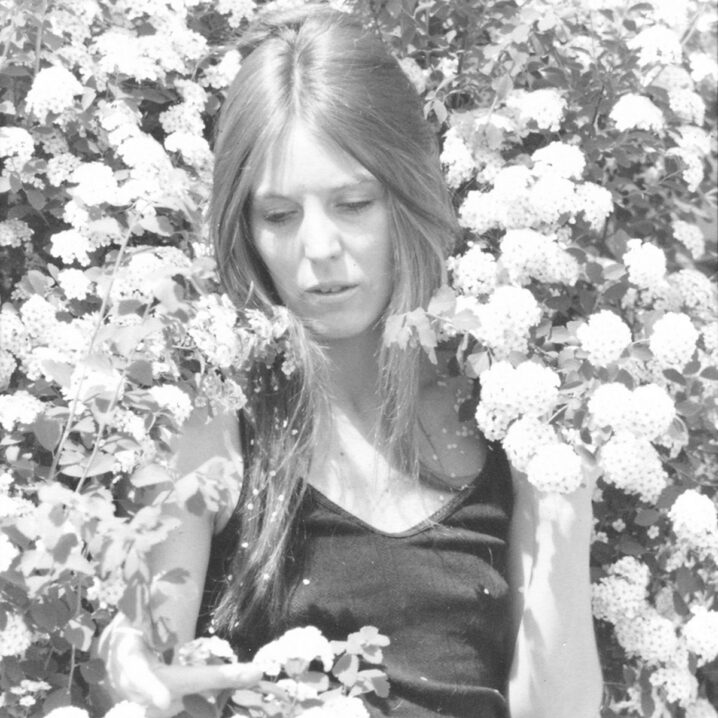
Meadowsweet, pictured above, dedicated to your mother, established what many heard as your early signature (field recordings processed into delicate, aerated drones). Twenty years later, you’ve revisited it with Meadowsweet (redux). What does the younger version of you who made that record sound like to the person you are now?
Unfortunately, I don’t have the separation to know or hear it. I originally thought about doing this at 10 years, but it was too late, and again at 15 years, but I did not start in time. Through this, I have revised the work every few years and have not really had the space I need to make that comparison. The most challenging thing about this reissue was that all the original files were lost in a hard drive crash in December 2006 (back your shit up). To do this, we had to lift the files off one of the original CD-Rs I burned from my archive. This might be a bit in the weeds, but when you add track markers to a continuous piece of music for a CD, something is lost, and no matter how you do it, it’s extremely hard to put them back together in a DAW. In 2016 and 2021, I tried and failed. I was determined to get it right at 20 years, so I gave the files to Lawrence about a year ago, like a child giving a parent a broken toy, and asked him to fix it. Lawrence, being Lawrence, did it perfectly and gave the release a whole new life! That is why I included the whole album as an individual track as a Bandcamp bonus; it had literally been 20 years since a file like that existed.
You’ve moved from CDr editions in skinny jewel cases to installations at The Broad and the Getty Villa. That’s a remarkable expansion of scale and institutional context. Has the intimacy of the work survived that expansion, or has it had to transform into something else?
I hope it has, or that I have at least kept the balance I was going for. There was a line in a review of my exhibition, Relocation, that always stuck with me: “The closest I can get to describing his approach is that it’s a combination of generosity and restraint.” I want to make work that has enough of me in it to have a point of view, but not so rigid that the audience can’t see themselves in it or make up their own meaning for it. This is what draws me to abstract work in any form; it’s the perfect vehicle for ideas, and I love to create a context around each work, but as soon as you release it into the world, you lose control over it. Now that it’s out in the world, there is no guarantee that a listener will read the Bandcamp description or a viewer will read the wall vinyl. As artists, we need to relinquish that control and make work that hopefully succeeds either way.
In the social media and streaming age, I think people have lost sight of that. Listeners sometimes decide that a release with a deep conceptual framework is a failure because a streaming audience misses it. Or a listener can’t hear it in the work, so that’s a failure too. All of this fails to allow the work to live on a spectrum, where it can succeed and/or fail at the same time, or it can be loved or hated by someone who ignored all of it and made up their own relationship to it.
For me, the world has continued to be a challenging place, and there are things I want to convey with my work that abstract work is the perfect carrier for, because it can hold space for additional layers of meaning, whether the audience knows it or not, and I hope that can happen at any scale.
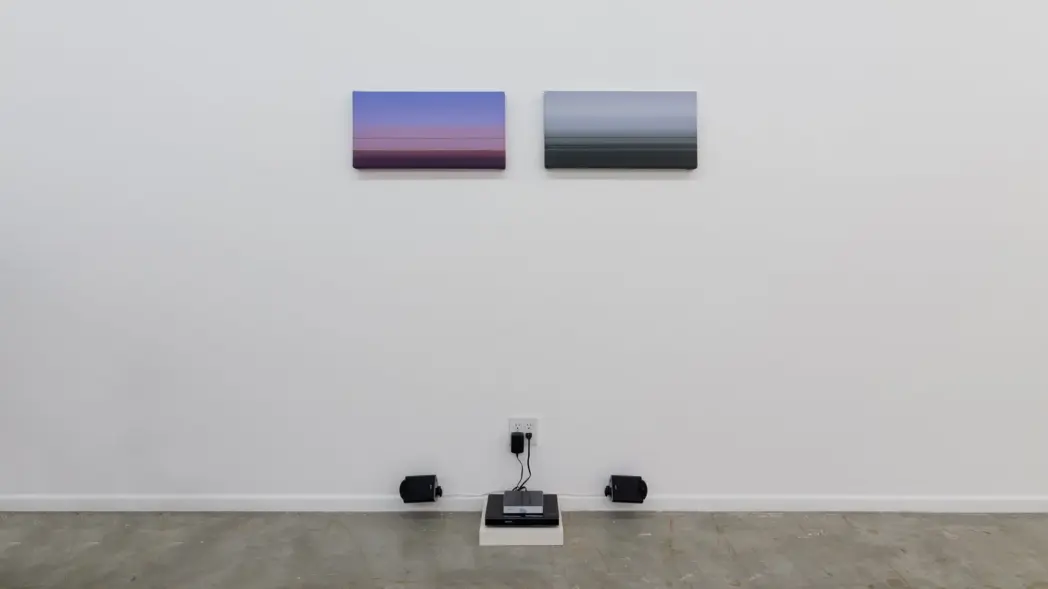
You’ve grouped your partial color blindness, dyslexia, and tinnitus under the term “perceptual insecurity.” That framing positions them not as deficits but as a particular vantage point. Was there a period when you experienced them differently, as obstacles rather than perspectives?
I absolutely used to think of them as obstacles. The best example is my early video work – I used to only make videos from photographs I had taken, and I never generated anything from scratch. That was because I could point to the original photo and say, ‘That’s where the colors came from.’ I did not want to put myself in a position where I had to justify why I used a color because I did not trust myself and feared I would identify something incorrectly. I did not realize how bad my color blindness was until I was walking around Seattle with an Ex during cherry blossom season and said ‘I love this time of year when all these white flowers bloom.’ He had to explain that they were cherry blossoms, which I knew theoretically were pink, but had not put together that they were also the blossoms all around me. I felt similarly about reading out loud because I will inevitably see a word that is not there and read it wrong.
Having grown up with both of these insecurities, when my tinnitus developed in 2015 and a few years later I learned of my hearing damage, I had similar insecurities about the sounds I was making. To this day, if you put a lot of my work through an EQ, you will see a dip at I think it’s 1K Hz? I am more visual than number-oriented with EQs, so I can never remember exactly which range is affected. This is because I am unsure of myself in that range, so if I skip that range, I can be more confident about my mixes.
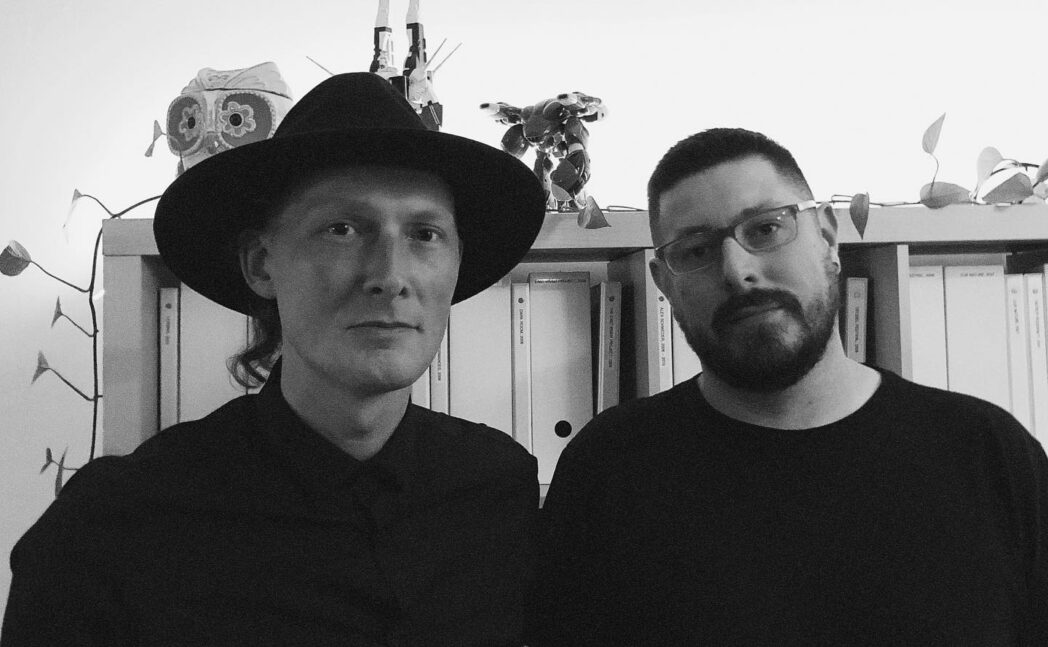
Dragon’s Eye has published over 100 editions since you relaunched it in 2005. At what point did running the label shift from being a vehicle for your own scene to becoming a practice in its own right – something with its own logic and demands separate from your art?
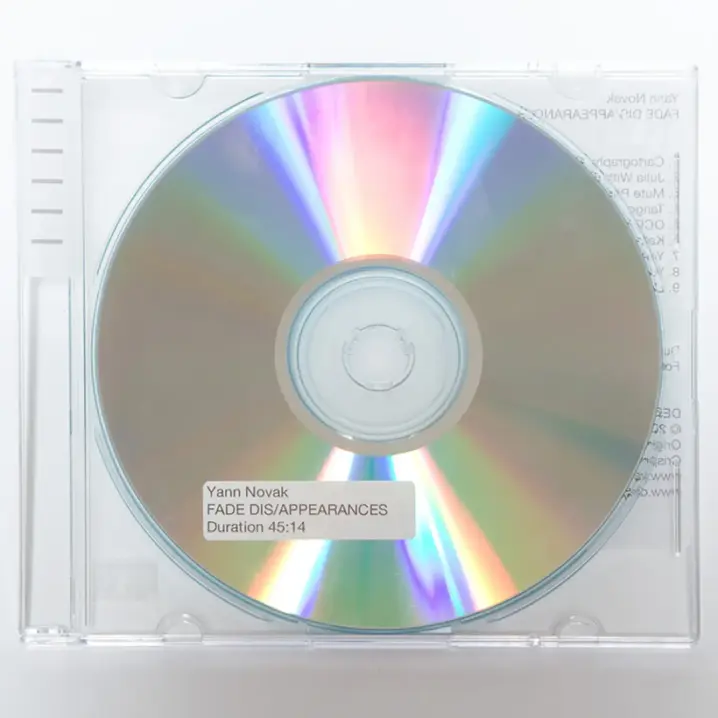
I think it happened in two stages. Right away, it became bigger than I’d planned! My first release, Fade Dis/Appearances, was the score to a dance piece. I burned 100 copies on CD-R, one by one, in skinny jewel cases with vellum mail labels with name and track list printed on them. I was not expecting a review in the local alt-weekly, let alone in The Wire or being on a list of best PNW records. I thought I would hand it out to some friends and sell a few at shows. Then every release performed like that, regardless of the scale and DIY mentality I was approaching it with.
Then, when I moved to LA, it expanded even further. I was immediately contacted by Celer and Sublamp, both just welcoming me to LA and wanting to connect. I formalized the design and packaging a bit, doubled the production runs, and ended up doing releases with both of them within a year. Around the same time, the wonderful and sadly now defunct Smallfish in the UK (an online record shop and label) started distributing us. I would send 1/4 of the run to them and sell out the rest directly to fans. A good release would sell out in a few days, a ‘less successful’ one might take a month, but they always sold out!
With all that success came a huge responsibility to do right by the artists who trusted me with their work, which meant I had to divorce the label from my own work and identity to really make room for them to shine.
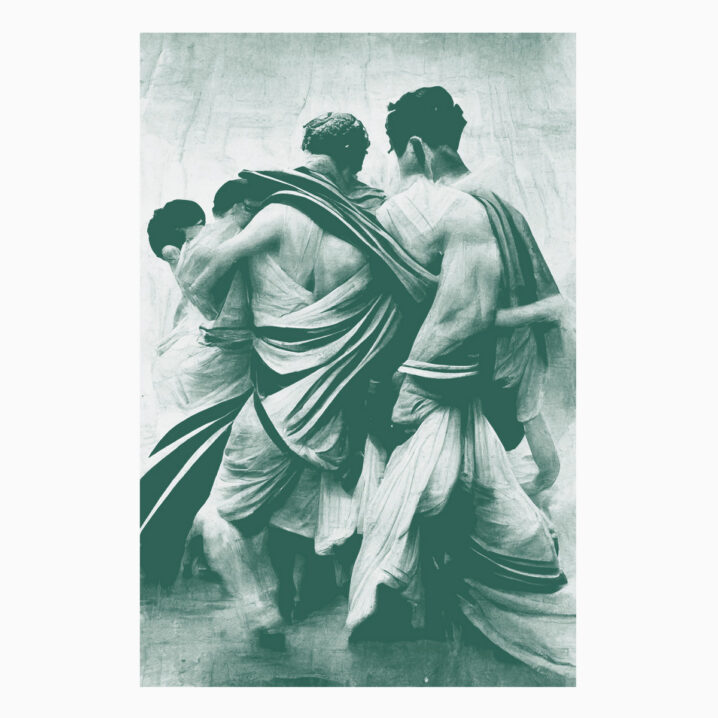
The Voice of Theseus project explicitly frames your perceptual differences as a philosophical framework — the Ship of Theseus paradox applied to identity and sensation. At what point did you begin to see your own neurological profile as conceptual material rather than biographical fact?
I have always been a bit rebellious around this stuff. I think I always understood my differences intellectually, but the Ship of Theseus paradox gave me a framework to explore them formally. One thing I don’t talk about much is that I have a lisp. I was home-schooled for kindergarten and 1st grade until the state pressured my parents to enroll me in school. 2nd grade was a huge culture shock for me, and one aspect of it was that they sent me to a speech therapist to try to get rid of my lisp. I could not hear it, and did not understand why my saying my S’s a little differently was bad. Everyone still understood me? So I pushed back with the therapist, not disputing that I was talking differently, but wanting a concrete reason why I had to say my S’s like everyone else. I never got one, and they ended up giving up, and I still have my lisp today. I think in so many ways I have been told I am different or deficient, dyslexia is even called a disability in some countries.
Most of my life, all I wanted was to just be allowed to be different and for that to be ok.