The following is an excerpt from an ongoing conversation with Joachim Spieth, the current featured artist on Headphone Community. His month-long residency is almost over, but you can still catch him for an in-depth discussion on sound sculpting, transforming source material, running a successful Affin label, and much more (and yes, Bandcamp codes giveaways!). Below is a hand-picked selection of questions and answers across the entire month. Enjoy!
Your technique of layering sounds with radical cuts on frequency ranges is central to your sound. What’s happening in those cut frequencies that you’re deliberately removing, and why is that absence crucial?
I think it’s important for me to identify what’s essential about the sound, why I like it… and then remove other parts if they’re distracting or not working, using EQs, etc. That way, I can put what I want to emphasize (in the sound), and the rest makes room to give other elements space. Of course, you can misjudge things or overemphasize something; I’ve had some unexpected experiences with mastering. But little by little, I can better judge how far I can go, or conversely, how many layers something might have good intentions, but doesn’t lead to the expected result sonically.
On “Ousia,” you replaced filter movement with loudness/silence dynamics. What did working with absence and presence as the primary movement teach you that filters couldn’t?
I believe that at the time, it wasn’t so much about filtering out contrasts, but rather the realization that I hadn’t sufficiently considered the interplay of silence and lulls in my music. If there are silent parts, then a different perspective emerges on the loud parts as well… sound quality… or the selection of which sounds are included. Before, it was wonderful for me to drift in sound baths… then I discovered that fading in and out has other qualities that I also wanted to integrate.
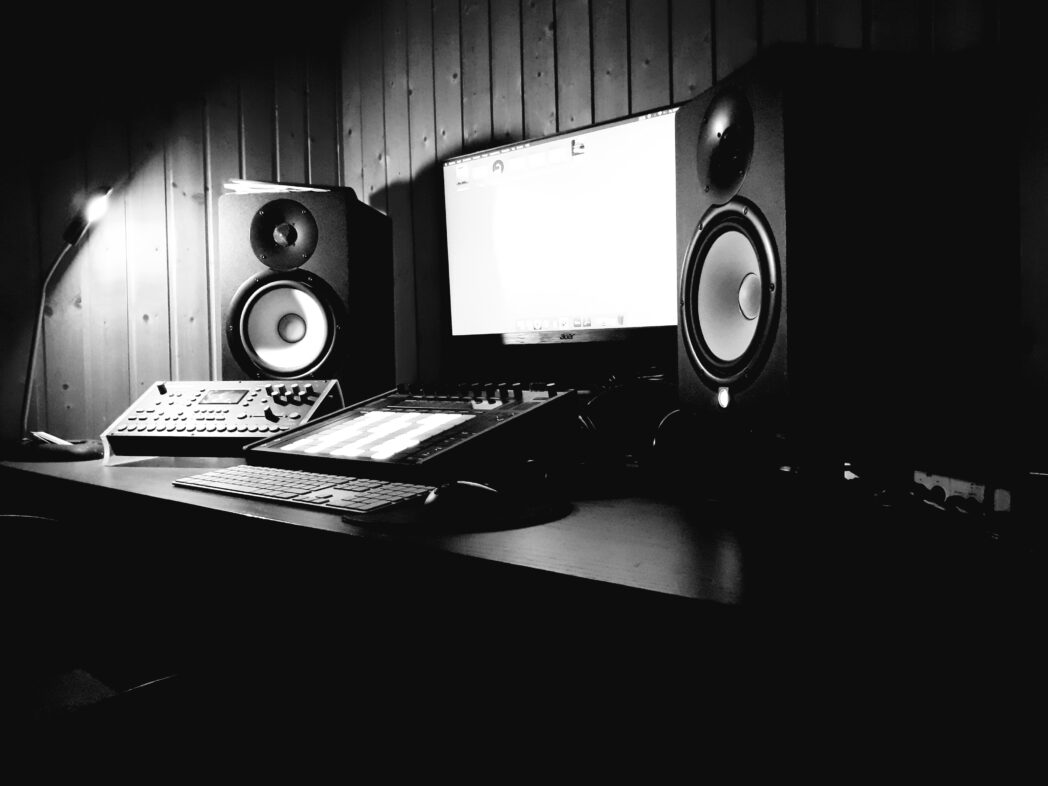
Which mix decisions do you deliberately make at whisper-level volume, and which require loud playback to judge?
I hardly ever listen at super-loud volumes when making music anymore, but for some time now I’ve been working much more with headphones and speakers in direct comparison, whereas most of my music was created largely without headphones (until recently). Looking back, that was probably a mistake, but that’s all in the past now. It’s more of a checking and cross-checking process now than before.
Your partnership with Giovanni Conti at Artefacts Mastering has been transformative. You’ve described mastering as “the most powerful tool” for shaping your sound. What specific aspect of your sonic signature only exists because of Gio’s approach?
For me, it’s largely related to the fact that I bought some plugins after seeing them in use in his mastering studio (he also uses a lot of hardware). I often sat in his studio when he was mastering my tracks or those of other related artists. This allowed me to get closer to my music, see weaknesses in the sound, and have many conversations with him about them. At the same time, I also received feedback on how changes in my workflow affected the sound. It’s from this context that I made this statement. He opened my eyes to how important it is to have a clear idea of sound, no matter what kind of music you make.
Your label, Affin, initially had no strict guidelines and functioned as a playground for various preferences. What forced the consolidation toward the current focused identity? Was it gradual evolution or deliberate redirection?
Both. You also mustn’t forget how much older I am now than when the label started… A lot of personal development is involved. Back then, I allowed myself to experiment a lot. Then (sometimes too slowly), I drew my conclusions from those experiments and arrived at a new point. Musically, I’ve always been open-minded in principle, but after spending so much time with electronic music, what resonates with you personally becomes more and more ingrained, and what will probably still sound interesting in a few years. The human filter has become more refined with age…
Across ambient, deep techno, and hybrids, what is the common denominator you listen for that isn’t genre?
An emotional component. I have to be able to feel it. That’s probably the most important thing about music in general. It has to evoke emotions. Technically well-made music that doesn’t trigger me on an emotional level might be well-made, but it doesn’t achieve anything… and then it doesn’t need to.
You prefer a smaller roster where artists aren’t releasing on countless labels simultaneously. How do you balance wanting artistic exclusivity with the economic reality that most electronic artists need multiple label relationships to survive?
Exclusivity isn’t the goal. But an artist who knows why they want to work with a particular label, that is a goal. There are plenty of wanderers who perch in every tree for five minutes and then move on… I’ve had enough of that… and it doesn’t benefit either the artist or the label in the long run. There are plenty of examples to illustrate this. Often, these are people who flatter you about how awesome your label is and how they’ve always wanted to do something for it (but were never visible before). Then maybe you start something together, and two months later, something new comes out somewhere else, or they do it themselves… etc. These are often people who think too strategically (short-term), but more isn’t always better. For me, it dilutes the label, regardless of whether an album or project is interesting. The difficult thing, though, is predicting how someone will behave. You’re increasingly right and sometimes still wrong, but that’s life.
Streaming has fundamentally changed how people consume music (often as background rather than focused listening). How has that shift in consumption context affected your curatorial decisions or release strategies?
We focus on physical/download releases and on people who are willing to pay for them. Streaming isn’t something I’m particularly concerned about. We now release music for streaming later than we do for CD or digital download. I think that, as it has developed in recent years, music streaming has no future for our kind of music. You can see a lot of artists whose track “A” has been picked into a playlist and gained 1 million streams, for example. But the artist, nobody knows… so the correlation on stream and people knowing about a project/artist almost disappeared … and as a label/musician, what’s the advantage for me, having maybe 1 million streams, but still nothing is moving according to it? Streaming is for passive listeners; it’s more of an extra, but for me, not a serious music market that gets me anywhere… and for most musicians, it’s just the same…
If you could abolish one release norm (release-week churn, single-led rollouts, playlist thinking), what would you replace it with?
Let me answer the question freely in my own way: I’m convinced that universal platforms, whether social media or streaming services, which are essentially empty but aim to act as a container for all kinds of content/art, have created the situation we’re in today with a large number of diverse players. Therefore, the logical consequence would be to bring this diversity back into specific platforms and shops to ensure a certain degree of clarity. A practical example is readily apparent in your Headphone Community, because the people who participate know why they’re part of it. And we essentially need this kind of identification to grow again so that new ideas can flourish and not get lost (unheard) in the IT noise. That is my positive outlook for now 🙂