Let’s start at the very beginning. Can you tell us how you got involved in composing, and what was your very first piece of gear?
Growing up in the north of Iceland made me feel deeply connected to nature and the ever-changing weather. One winter’s day, a storm was raging outside. I remember feeling almost hypnotised by it, and I was drawn to the piano. That’s when I composed my first piece, The Storm, at the age of seven. My very first piece of gear was probably a tiny kids’ keyboard (about one and a half octaves), which I got when I was five. It made me endlessly happy – finally, I could play music in bed!
How many different studio iterations have you gone through, and what does your final setup look like right now?
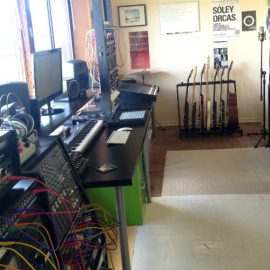
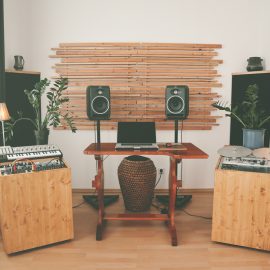
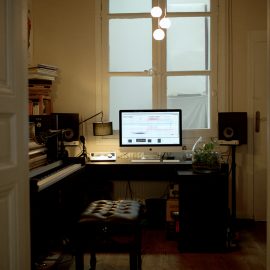
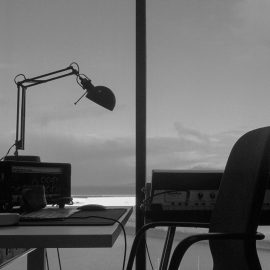
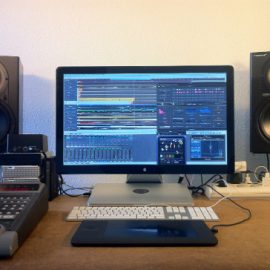
Honestly, it was only earlier this year that I set up my very own “bedroom studio” at home. I have been fortunate enough to work at Greenhouse Studios in Iceland for the past five years and will continue to do so for my records. My home setup is simple: an old upright piano, the Osmose synthesizer by Expressive E, a Shure SM7 vocal mic, a UA Volt 476 audio interface, Yamaha studio monitors, and an Ableton Push controlling Ableton on my laptop. Very minimal, but it works perfectly for me, and it’s mobile, so I can bring it to the countryside and get ideas fast and experiment.

Tell us about your favourite piece of hardware.
I’d have to say the Neve 1073 and 1084 preamps and EQs at Greenhouse Studios. Valgeir uses them often on my recordings, and they just have a character of their own – they make everything sound a little more alive.
And what about the software that you use for production?
I have recently started to use Ableton Live 12 and I’m completely hooked. It has helped me sketch ideas fast and granted me the possibility to produce and experiment with my musical ideas all by myself.
Is there a particular piece of gear that you’re just dying to get your hands on, and do you think one day you’ll have it?
My dream is to one day own a Steinway Series D concert grand. But as for synthesizers, I’d love a Prophet 5 or 8, and also a Juno 106. I’ve already promised myself those, and I truly believe one day I’ll get them… and yeah, some Moogs too. I just want to experiment with all the old analog synths.

Can you please share some aspects of sound design in your work?
For my upcoming album, I worked a lot with the Osmose, searching for airy textures and drone elements. Valgeir then mixed them so beautifully. I also loved recording multiple layers to create a fuller sonic world – those details really lift my piano playing.
Any particular new techniques that you tried out for your new album?
For the first time, I used a click track on a couple of pieces, which brought a new sense of continuity and structure. I also created an electronic track where I sing in English. Janus Rasmussen helped me discover my vocal sound, showing me how to work with my range and blend different vocal tracks into a fuller voice. He really opened my mind, and I can’t wait to share that track with the world.
What does your live setup look like, and what do you bring with you when you travel for an extensive tour?
Over the past few years, I’ve mostly been performing on grand pianos around the world, either solo or with my string quartet. For my upcoming tours this fall, I’ll still be playing on grand pianos, but I’m adding an electronic layer by bringing the Osmose on the road, along with Ableton Push to help express my sound-design world. And for the first time, I’ll also be singing live. I’m still experimenting with pedals, compressors, EQ, and doublers to shape my live vocal sound.

What is the most important environmental aspect of your current workspace, and what would be a particular element that you would improve on?
Nature first and foremost – I love being outdoors, writing lyrics, singing harmonies, and sketching scores on paper. I’m also building my future studio space with my partner, and we’re making sure nature is part of it. Our land in Hvalfjörður has incredible scenery, and that will play a central role in the workspace.
What can you tell us about your overall process of composition? How are the ideas born, where do they mature, and when do they finally see the light?
It’s always different. Sometimes I sit at the piano, hit record, and just improvise until something surfaces. Other times, I dive into sound exploration with the Osmose and Ableton Live, using soft synths and effects to stretch and distort sound. And then there are days I simply write poetry. When an idea arrives, I feel it takes shape – I sense which direction it wants to go, and I follow that intuition until it feels right. Meditation is essential in that process. It helps me stay present and receptive.
After the piece is complete, how do you audition the results? What are your reactions to hearing your music in a different context, setting, or sound system?
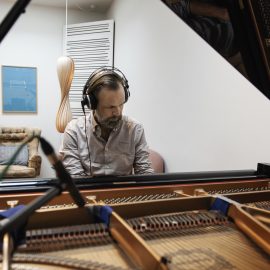
It depends on the piece. Sometimes I record at home, and other times I go to Greenhouse Studios with Valgeir, my collaborator. Recording there always feels magical – he has all the gear I could ever need to bring each composition to life.

Do you ever procrastinate? If so, what do you usually find yourself doing during those times?
I surely have moments of procrastination. Usually, I listen to music and check in with myself. There’s always a reason: maybe I’m tired and need to meditate or nap, or maybe I’m just avoiding something dull like admin, accounting, or budgets. As artists, we wear many hats, and not all of them feel inspiring – so procrastination sneaks in, and sometimes new ideas arise from it.
What gets you inspired?
Inspiration comes from many directions, but the common thread is when I’m in a state of flow. When you allow yourself to simply be, that’s when I feel most open to finding an outlet and shaping it into music.
And finally, what are your thoughts on the state of “electronic music” today?
I’ve been especially inspired by artists who seamlessly blend analog and digital worlds in their scores, like Hauschka and Ludwig Göransson. Their work shows how electronic textures can expand the emotional range of traditional instruments without overpowering them. Nils Frahm’s Live from Paris set also struck me deeply — it’s a reminder of how electronic music can feel both intimate and vast at the same time. I think the way artists today are merging classical soundscapes with electronic elements is a beautiful evolution, one that opens up endless possibilities for storytelling. It excites me to explore this territory myself, both in my own compositions and as I continue building my future studio. I also see this becoming a natural path for me in film and television scoring, where that meeting point between acoustic and electronic feels especially powerful. But in the end, it’s all about the emotion, no matter the technique.

On October 10th, 2025, Eydís will release a new album, titled Oceanic Mirror, via Sony’s XXIM Records. Along with the album, she will also set out on an international tour. You can find the concerts and tickets here. You should also check out the video for “Helena’s Sunrise“.