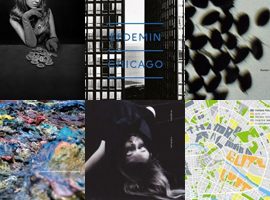
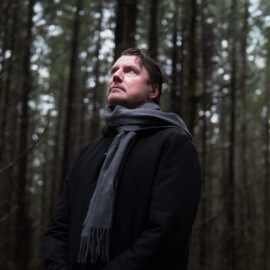
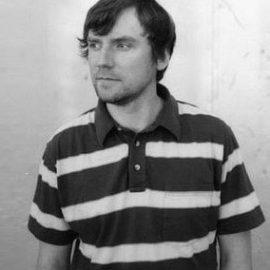
The following is an excerpt from an interview with loscil, who is currently the featured artist on Headphone Community. It’s one of my favourites so far. The first two entries feature some questions about Scott’s albums, studio, and production techniques, but here, Scott shares so much more, and I feel like I’m genuinely beginning to know him on a deeper level. And that is what it’s all about. You can join us in this ongoing discussion right now and have the opportunity to ask your questions as well. On the platform, you will also find previously unreleased tracks, massive discount codes (80% OFF loscil’s Plume, Endless Falls, Suns, and maybe more!), and many other exclusive perks! Additionally, the real game-changer of this new platform lies in the fact that your every single contribution goes back directly to supporting the artist. Join us for an ongoing conversation about music, where this interview is currently in progress, published in multiple parts!
Looking back to your first album on Kranky (Triple Point, 2001) and comparing it to your most recent work, in what ways do you feel you’ve evolved as an artist? Are there any core elements of the loscil sound or philosophy that have remained constant throughout, even as other aspects have changed over the years?
Well, first of all, I’ve said this many times over the years, I view loscil as a project. While it has become a very long-term project and intertwined with my identity as an artist, part of the reason I release things under the loscil name is because I consider those releases true to the identity of the project itself. Obviously, the project is inextricably linked to me and my identity, but keeping things at arm’s length allows me to keep a kind of personal distance from it that I prefer. Musically, I think I’ve allowed the project to expand outward stylistically. Perhaps some of those early influences of Aphex Twin, dub, and IDM have been mashed and transformed into something less obvious. In more recent works, I’d say I’m more interested in experimenting with form and contrast. A constant for me is probably rhythm. The drummer in me never quite dies. Even though I push things into drone, ambient, and acoustic realms, I always return to pulse and meter as points of interest. Rhythm and the traditionally undervalued musical elements of texture, density, dynamics, and timbre have remained the most constant points of interest for me over the years.

What moments or releases do you consider turning points in your artistic trajectory? For example, was there a particular album that you feel redefined your approach, or an experience that deeply influenced your creative outlook moving forward (such as a significant collaboration, a change in technology, or even a personal life event)?
One of the biggest events in my life occurred in 2012 when I was laid off from my job in the video game industry. I had worked in games for over 10 years, was in a senior position as a Sound Director, and was quite established. Despite loscil already being a project for 13+ years, it had never made me enough money to live off. I had resigned to it being more or less a hobby. But getting laid off, despite how terrifying and devastating it was at the time, ended up being an invaluable gift. I had an incredibly productive few years producing Sketches from New Brighton, Sea Island, and Monument Builders between 2012 and 2015. I started touring again, doing audiovisual work, and took on every scoring project I could. I committed to being a full-time artist, which completely changed my life. It hasn’t been without ups and downs and stressful times, but looking back, this life shift was momentous for me, and I wouldn’t have it any other way.
You’ve been releasing music on the Kranky label for most of your career, which speaks to a long-term partnership. How has working with Kranky (and occasionally other labels) shaped your journey? Do you think being on a label known for experimental ambient music provided you with a certain freedom or audience that impacted the music you made?
It’s a very special relationship. Like family. Kranky has been a foundation for me, and I’m so lucky to have made that connection with Joel, Bruce, back in the day, and Brian. Clearly, I’m a huge fan of the roster. So many artists I admire, but also great friendships I have sustained over the years.
Brian McBride’s passing was incredibly difficult to accept. My first tour as loscil was opening for Stars of the Lid in Europe in early 2002. I really bonded with those guys, Brian in particular. I looked up to him. It’s a harsh reminder that this life is fragile and temporary. But I’m grateful to have known him, toured with him, and collaborated with him.
It’s humbling to be a small part of the Kranky story. I honestly can’t imagine being in the position I am now without that partnership. At this point, I think we’ll just ride it into the sun together.

The ambient/electronic music scene has grown and shifted since the early 2000s. How have you seen the scene change in terms of audience, technology, or aesthetics during your career, and how have you navigated those changes? Have broader trends in music ever influenced you to try something different, or do you deliberately shield your creative process from outside currents?
Honestly, this topic could be a whole book. And I’m not really a musicologist. If you can call “ambient” a scene today, I would say there wasn’t one back then. There were perhaps individual, disconnected scenes approaching music in similar ways. But there were vast spaces of emptiness between Stars of the Lid and Gas, for example. They didn’t exist in the same world, despite the fact that they might be on a Spotify playlist together today.
I think the introduction of streaming really solidified some of the more disparate musical worlds – for better or worse. It has globalized everything to some extent. I mean, genres don’t matter to most artists, but it is interesting how homogenous everything has become now. I used to shudder at classifying my music as ambient, but I’ve just given up the fight for lack of a better descriptor.
And then there’s vinyl. A whole other weird phenomenon that had all but died by the time I started releasing albums in the early 2000s, then was slowly resurrected again and acted as a counterbalance to streaming for a lot of niche artists and labels. It’s possibly dying again, or at least becoming too expensive for most of us. The ebbs and flows of the industry can be difficult to keep up with and impossible to predict. Hence why I’ve resigned myself to just focus on the joys of making things. A significant part of me is forever indie. I think it’s really important for artists not to get too caught up in adhering to what the market demands. I get chills when I hear of artists trying to cater their music to best suit Spotify playlists. I don’t blame folks for wanting to make a living, but part of culture dies when artists cater to corporate forces.
After so many releases and years of making music, what drives you to keep creating? Has your personal definition of success or fulfillment in music changed since your early days? For instance, were there goals you chased when you were starting out (like certain sounds, playing live, reaching listeners) that have since been replaced by new motivations?
I honestly don’t know. I feel like I could stop at any point. I have low days where I feel like there’s no point in continuing to create and produce. But music is also a deep-rooted part of who I am. I’ve been making music in some way, shape, or form for over 40 years. And I enjoy all the people I’ve met and connections I’ve made. If nothing else continues, I hope the community aspect will.
My goal in the early days was to release an album on a reputable label. I achieved that goal by signing with Kranky. My goal after losing my job in 2012 was to make a living off my music, and I achieved that goal, so far. I think I’m entering a new phase where I want my focus to shift away from anything overtly commercial and focus on self-direction, collaboration, and mentorship. I still haven’t made my best record. So it helps with motivation to feel like there’s still a magnum opus to pursue, even if I never find it.

Continue reading on Headphone Community…
(There are five more questions in this installment, plus two previously published entries, and more to come!)